$11 million in New Markets Tax Credits financing will support mixed-use redevelopment with much-needed rental housing and community-serving commercial space.
FOR IMMEDIATE RELEASE December 29, 2025
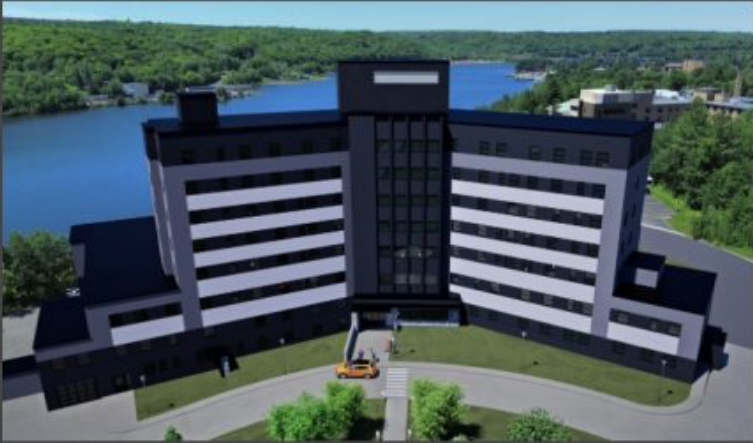
LANSING, Mich.– Michigan Community Capital (MCC) is investing in the transformation of the former Jutila Center in Hancock, Michigan, into Skyline Commons, a 140,000-square-foot mixed-use development that will bring new housing options and vital commercial space to Houghton County. MCC is supporting the project with $11 million in federal New Markets Tax Credits (NMTC) allocation.
“Since Finlandia announced its closure in early 2023, we’ve been on a mission to save this landmark building for Hancock,” said Andy Moyle, President & Property Development at Moyle Development. “It took real persistence, but we finally built the right team and got key support from the City of Hancock, Keweenaw Economic Development Alliance, and Houghton Country Brownfield Redevelopment Authority to bring Skyline Commons to life for the community. The redevelopment breathes new life into a local icon, improves Hancock’s skyline with major exterior upgrades, and adds much needed housing and commercial spaces for the area’s future.”
Led by Moyle Development, Skyline Commons will convert the fifth, eighth and ninth floors of the building at 200 Michigan Street into 29 mixed-income rental apartments, including 15 homes that are affordable at or below 80% of the area median income, 9 of which will be income-restricted. The remaining space will be leased to a variety of commercial tenants, including the Copper Country Intermediate School District, the MTEC SmartZone entrepreneurial hub, and Little Brothers Friends of the Elderly, a nonprofit that provides free programming for older adults.
“This project helps ensure that a landmark building remains a community asset instead of a liability,” said Eric Hanna, president and CEO of Michigan Community Capital. “Skyline Commons will provide quality homes in a market with a severe shortage of rental housing while preserving space for education, entrepreneurship and supportive services all under one roof.”
This redevelopment is expected to create or retain 46 full-time living wage jobs in a “severely distressed” census tract with a poverty rate of nearly 26% in a non-metropolitan county.
The closure of Finlandia University in 2023 left Hancock with a significant amount of vacant real estate and the risk that the 9-story Jutila Center would sit empty or become a costly burden for the county. Without a committed developer and layered public and private financing that includes NMTCs, brownfield incentives, MSHDA housing tax increment financing, and a low-interest $4.5-million loan from the Michigan Economic Development Corporation, the substantial rehabilitation required to bring the structure back into productive use would not be feasible.
“The MEDC is proud to support the Skyline Commons project; this investment building on our commitment to revitalizing communities as part of the state’s Make It in Michigan economic development strategy,” said MEDC’s SVP of Community Planning and Development Readiness Michele Wildman. “By expanding new housing options alongside much-needed commercial space, this project helps meet the community’s growing demand for places to live, work, and gather, supporting residents today and positioning Hancock for long-term vitality. Vibrant, welcoming places are the foundation of a strong economy, and we’re excited to partner with the City of Hancock to create the kind of community where people can build their futures and businesses can thrive.”
Valley National Bank/Dudley Ventures will serve as the NMTC investor.
“Dudley Ventures/Valley Bank is proud to support the Skyline Commons project that will bring much-needed housing and will revitalize an important community asset for the residents of Houghton County,” said Kyle Koupal, Vice President of Investments at Dudley Ventures. “This investment reflects our commitment to strengthening local neighborhoods and supporting initiatives that clearly respond to community need.”
The project directly responds to documented housing needs in Houghton County. According to the State of Michigan Housing Data Portal, the county faced a shortage of 1,914 rental homes in 2023, 55 percent of renters were cost-burdened, and more than half of all homes were more than seventy years old. By creating new, energy-efficient apartments in the heart of Hancock, Skyline Commons will provide options for employees of local businesses and schools, people relocating to the area, seniors and veterans seeking affordable, convenient housing.
Skyline Commons is aligned with the City of Hancock Master Plan’s goals to repurpose former Finlandia University buildings for meaningful community functions and expand quality housing choices. The project has received broad support from the City of Hancock, the Local Development Finance Authority of Houghton County, the Houghton County Board of Commissioners and local school district representatives.
Michigan Community Capital
Michigan Community Capital is a 501(c)(3) nonprofit that exists to promote community and economic development, the creation of wealth and job opportunities; and to facilitate investment of private and public capital in Michigan. MCC is focused on driving economic mobility of low- and moderate-income Michigan residents and drives community development impacts in three key areas: Real Estate Development, CDFI lending, and New Markets Tax Credits. MCC is a U.S. Treasury certified Community Development Entity (CDE) and through its affiliate, Magnet Lending Corporation, a certified Community Development Financial Institution (CDFI). Since 2005, MCC has supported over $1.4 billion in project financing, successfully attracted $510 million in federal New Markets Tax Credits, and helped to create over 1,500 housing units and facilitated the creation and/or retention of over 5,000 high-quality, accessible jobs. Michigancommunitycapital.org.
###
Renovation of a long-vacant building will create new apartments, short-term rentals in a commercial zone, and flexible space for local nonprofits in Muskegon’s Midtown district.
FOR IMMEDIATE RELEASE December 16, 2025
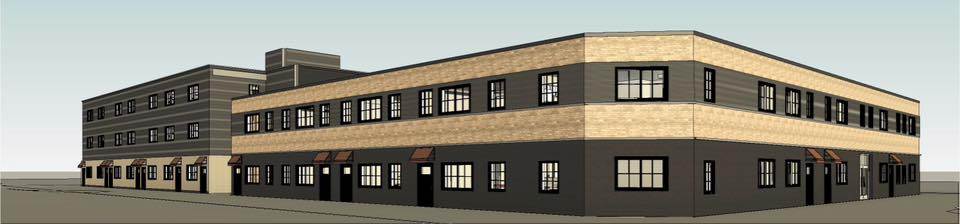
LANSING, Mich.– Michigan Community Capital (MCC) is supporting the transformation of a long-vacant roughly 26,500-square-foot building at 1095 3rd Street into the Muskegon Midtown Center, a 63,000-square-foot mixed-use development that will bring new housing, tourism-focused lodging, and community-serving space to a deeply distressed commercial corridor. MCC is providing $12 million in federal New Markets Tax Credit (NMTC) allocation as well as a source loan through its lending subsidiary, Magnet Lending Corporation.
“This project is more than bricks and mortar for us – it’s an opportunity to create new housing options, support small businesses, and make space for organizations that serve our neighbors every day,” said Frank Peterson, Operating Partner at WheelFish Group, LLC. “Muskegon Midtown Center represents the kind of layered, community-driven investment that can expand opportunity for people who live and work in this district.”
WheelFish Group, LLC will renovate the existing structure and construct a sizable addition to create 56 residential units, 17 of which (30%) will be affordable at or below 80% of area median income (AMI). In addition to apartments, the project will include commercial space for a short-term vacation rental business that is intentionally located in a commercial district, flexible meeting and classroom space for local nonprofits and grassroots groups, and back-of-house space that will support operations at the nearby Hackley Castle Inn and Suites boutique hotel.
“Muskegon Midtown Center is exactly the type of catalytic, mixed-use investment that New Markets Tax Credits were designed to support,” said Eric Hanna, president and CEO at Michigan Community Capital. “By pairing our NMTC allocation with a loan from our subsidiary Magnet Lending Corporation, we are able to help bring new homes, responsibly located short-term rental services, and community-centered nonprofit space to a corridor that has experienced disinvestment for decades.”
The project is located in a census tract which qualifies for NMTC as a “deeply distressed” tract with a poverty rate of 33.7%, median family income at 36% of the area median, and an unemployment rate more than twice the national average. The site is also in an Opportunity Zone and a CDFI Investment Area, underscoring the need for reinvestment and accessible opportunities for residents.
Dudley Ventures / Valley National Bank is serving as the NMTC investor.
“We are proud to be the NMTC investor in the Muskegon Midtown Center. This mixed-use development will create needed quality housing and nonprofit space, as well as support long-term community revitalization,” said Troy McClelland, Vice President of Tax Credit Services at Dudley Ventures. “Our commitment reflects a belief in Muskegon’s future and the power of strategic partnerships to create lasting economic and social impact.”
Muskegon Midtown Vacation Rentals, LLC will lease space for 11 short-term vacation rental units within the mixed-use building. This model aligns with the City of Muskegon’s approach of treating vacation rentals as commercial enterprises and locating them in appropriate commercial zones. Concentrating short-term rentals in the Midtown commercial district helps direct tourism spending toward local businesses and restaurants while preserving the peace and character of residential neighborhoods.
Reset Ventures, a local nonprofit that has deployed more than $3 million to support community organizations since 2021, plans to lease space for community-oriented meeting and classroom facilities. The space will be available to smaller nonprofits and grassroots groups that often lack access to affordable, professional venues for their work. Planned uses include neighborhood organizing meetings, skills-building classes, nonprofit retreats, and community forums that strengthen local networks and civic engagement.
Hackley Castle Inn and Suites, a boutique hotel under construction in a former 1890s school building across the street, is expected to lease lower-level space in Muskegon Midtown Center for storage, staff training, and other operational needs. This arrangement will help preserve guest-facing areas in the historic hotel while supporting efficient day-to-day operations.
Michigan Community Capital
Michigan Community Capital is a 501(c)(3) nonprofit that exists to promote community and economic development, the creation of wealth and job opportunities; and to facilitate investment of private and public capital in Michigan. MCC is focused on driving economic mobility of low- and moderate-income Michigan residents and drives community development impacts in three key areas: Real Estate Development, CDFI lending, and New Markets Tax Credits. MCC is a U.S. Treasury certified Community Development Entity (CDE) and through its affiliate, Magnet Lending Corporation, a certified Community Development Financial Institution (CDFI). Since 2005, MCC has supported over $1.4 billion in project financing, successfully attracted $510 million in federal New Markets Tax Credits, and helped to create over 1,500 housing units and facilitated the creation and/or retention of over 5,000 high-quality, accessible jobs. Michigancommunitycapital.org.
###
Renovation of Shed 7 will modernize Detroit’s historic food hub, expand refrigerated space for urban growers, and strengthen regional food system.
FOR IMMEDIATE RELEASE September 30, 2025
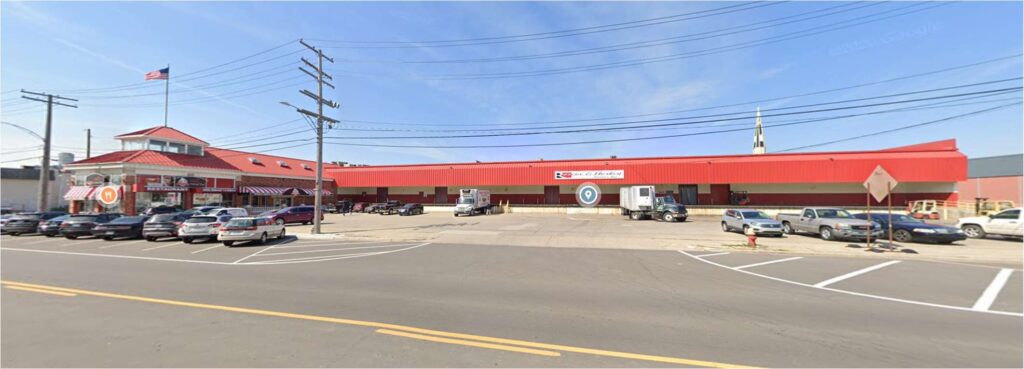
LANSING, Mich. – With support from Michigan Community Capital (MCC), the Eastern Market Partnership (EMP), together with its subsidiary Eastern Market Development Corporation (EMDC), is renovating and expanding the outdated Shed 7 building to create an approximately 43,000-square-foot cold chain- and Food Safety Modernization Act-compliant space. MCC has provided $10.75 million in New Markets Tax Credit (NMTC) allocation in addition to a bridge loan.
NMTC proceeds from MCC will fund upgrades to the facility to ensure cold chain compliance, installation of additional refrigeration to support smaller growers, security improvements to protect food safety, and upgrades to mechanical and electrical systems. Magnet Lending Corporation, a subsidiary of MCC, will provide a bridge loan of approximately $5.26 million for a $12-million grant from Michigan Department of Agriculture and Rural Development (MDARD).
“Michigan Community Capital is proud to support the Shed 7 redevelopment with both New Markets Tax Credits and bridge financing,” said Liz Alexandrian, Vice President of Lending at Michigan Community Capital. “This project not only strengthens Detroit’s historic Eastern Market but also expands opportunities for small growers, urban farmers, and food entrepreneurs who are vital to the city’s future. By modernizing this facility, we are helping ensure food safety, preserving critical jobs, and investing in a food system that delivers fresh, healthy produce to communities across the region.”
The Shed 7 project is vital to the Eastern Market area and Detroit’s Eastside. It will retain the building’s primary tenants, including RJR Distribution, LLC (RJR), Frank’s Deli and Grill, and Tocco’s Fresh Produce, while providing affordable refrigerated space to regional farmers and 20+ urban farming organizations. Detroit’s historic Eastern Market is a wholesale food hub where over 54 million pounds of produce were sold in 2023. The organization also operates seasonal markets and partners with groups such as the Detroit Black Farmer Land Fund and Oakland Avenue Urban Farm to expand access to minority- and women-owned growers.
Eastern Market Partnership, acting as the economic development organization for the greater market district under a management agreement with the City of Detroit since 2006, created EMDC as a nonprofit real estate development organization to serve as the direct sponsor of the project.
“Eastern Market is an anchor of Detroit’s economy, a platform for local entrepreneurs, and a catalyst for regional food systems,” said Katy Trudeau, President and CEO of Eastern Market Partnership. “Shed 7 brings our mission to life by creating space that reflects the diversity and talent of our food economy and by removing barriers for growers who’ve long been underserved.”
The project will track produce volume and transportation efficiency, including pallets moved and truck logistics. EMP anticipates the investment will double food volume sold at the market and expand its Mobile Markets program from 15 to over 40 locations across Wayne County, increasing fresh produce accessibility in underserved areas.
Located at 3445 Russell Street, Detroit, the project qualifies for NMTC in a “deeply distressed” census tract with a median family income at 33% of the area median, a 44.8% poverty rate, and 22.8% unemployment (over four times the national average). The project is expected to create 17 construction jobs and retain or create 36 permanent positions through the facility’s tenants.
“For J.P. Morgan, supporting the renovation and expansion of Shed 7 reflects our commitment to Detroit,” said Melissa Pillars, Executive Director of Community Development Banking, J.P. Morgan. “This facility is an investment in Detroit’s food businesses and urban farmers and strengthens Eastern Market as a space where local entrepreneurs, culture, and community come together. We’re proud to partner with Michigan Community Capital and Eastern Market to create new opportunities.”
Project Financing Overview
MCC NMTC allocation: $10.75 million
Invest Detroit NMTC allocation: Approximately $4.65 million
NMTC investor: Chase Community Equity, LLC
Other loan sources include grants from MDARD and the Gilbert Foundation.
“Invest Detroit has been a proud partner of Eastern Market for many years, and we are thrilled to help finance this important project,” said Marcia Ventura, Senior Vice President of Lending at Invest Detroit. “By providing subsidized cold storage space, especially for Detroit’s urban farmers, we’re helping more locally grown produce reach consumers quickly and safely. This investment is expected to triple sales for local growers, strengthening the food system and creating new opportunities for small- and mid-sized producers across the city.”
The Shed 7 renovation represents a significant step in strengthening Detroit’s regional food system, providing modern, scalable infrastructure for urban and minority-owned farmers, ensuring food safety, and catalyzing economic development in a historically underserved community.
Michigan Community Capital
Michigan Community Capital is a 501(c)(3) nonprofit that exists to promote community and economic development, the creation of wealth and job opportunities; and to facilitate investment of private and public capital in Michigan. MCC is focused on driving economic mobility of low- and moderate-income Michigan residents and drives community development impacts in three key areas: Real Estate Development, CDFI lending, and New Markets Tax Credits. MCC is a U.S. Treasury certified Community Development Financial Institution (CDFI) and a Community Development Entity (CDE). Since 2005, MCC has supported over $1.4 billion in project financing, successfully attracted $510 million in federal New Markets Tax Credits, and helped to create over 1,500 housing units and facilitated the creation and/or retention of over 5,000 high-quality, accessible jobs. Michigancommunitycapital.org.