New community center in former grocery store will bring healthy food access, job training and wrap-around services under one roof in Hart
FOR IMMEDIATE RELEASE February 19, 2026
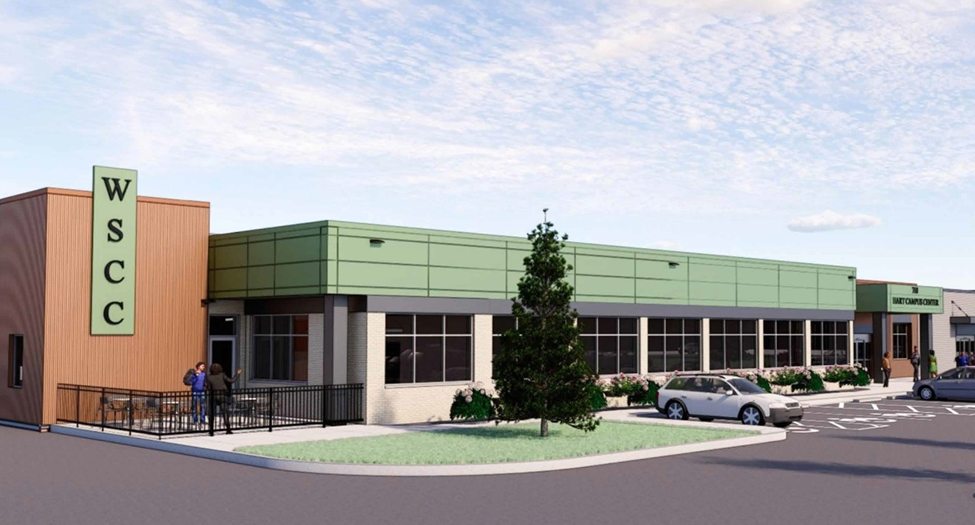
LANSING, Mich. – Michigan Community Capital (MCC) is supporting the transformation of a former IGA grocery building in Hart into the West Shore Community College Oceana County Education Center, a multi-tenant facility designed to expand workforce training, healthy food access and essential services for low-income residents of Oceana County. MCC is providing $7.5 million in federal New Markets Tax Credit (NMTC) allocation.
West Shore Community College (WSCC), a public community college established in 1967, is acquiring and renovating approximately 25,000 square feet at 710 S. State Street into classroom, training and community service space. From this site, WSCC and partner organizations will deliver job training, career counseling, wrap-around services, and affordable healthy food options that respond directly to local needs identified in regional planning efforts.
“The West Shore community center will bring together education, workforce development, healthy food access and family-supportive services in one highly visible rural location,” said Eric Hanna, president and CEO of Michigan Community Capital. “With the use of NMTC allocation, MCC is helping West Shore Community College and its partners create a community anchor that supports economic mobility for residents who have historically had to travel long distances for services many communities take for granted.”
The project is located in a census tract that qualifies for NMTC based on a median family income at 77% of area median income and is designated “severely distressed” by the CDFI Fund due to its location in a non-metropolitan county. The project responds to a 2023 workforce development study that identified a need for more local training options and aligns with the 2025 City of Hart Master Plan goals to rehabilitate existing downtown infrastructure and create a vibrant hub of community activity.
At full operation, the West Shore Community College Oceana County Education Center will house the following tenants:
Lakeshore Food Club – A nonprofit grocery store offering dignified, affordable access to healthy food for low-income families. The new Hart location is expected to serve approximately 1,800 low-income households annually using a membership model where all members are at or below 200% of the federal poverty level, with a modest monthly program membership fee that supports operations and helps sustain this choice-based approach. The site is in a USDA-designated low-income, low-access area, often referred to as a “food desert.”
Michigan Works! West Central – A regional workforce development organization that will provide job search assistance, mock interviews, job fairs, resume support, and connections to employers in a new 6,000-square-foot space.
Mid Michigan Community Action Agency (MMCAA) – A nonprofit offering wrap-around services such as utility assistance, weatherization support, USDA food boxes for seniors, housing counseling, housing stability services, and homebuyer support. MMCAA will relocate all Oceana County services from Shelby to the new hub.
Stella’s Coffeehouse – A second location for an established community-focused café that will sell handcrafted drinks and pastries made with locally sourced ingredients and host community events such as game nights and gatherings.
Collectively, the project is expected to support at least 15 full-time positions, with roughly 80% of roles accessible without a four-year degree. Lakeshore Food Club will intentionally recruit from traditionally hard-to-employ populations, including local low-income residents, students in work-based learning programs, seniors seeking supplemental income, current members, and clients referred through Michigan Works!
“This center reflects West Shore Community College’s mission to provide accessible education and workforce training that strengthens our communities,” said Scott Ward, president of West Shore Community College. “By bringing learning, support services, and healthy food access together, we are expanding opportunity and addressing current needs in Oceana County.”
WSCC is providing the leverage funding for the NMTC transaction using its own balance sheet to bridge an array of state and local grants that the college has assembled for the project. PNC Bank is the NMTC investor.
“Supporting projects that expand economic opportunity is central to our mission,” said John Nunnery, senior vice president and manager of Tax Credit Originations at PNC Real Estate. “The West Shore Community Hub is the kind of place‑based investment that strengthens rural communities by bringing essential services, education and workforce resources together in one location. We are proud to partner with Michigan Community Capital and West Shore Community College to help make this project possible.”
Michigan Community Capital
Michigan Community Capital is a 501(c)(3) nonprofit that exists to promote community and economic development, the creation of wealth and job opportunities; and to facilitate investment of private and public capital in Michigan. MCC is focused on driving economic mobility of low- and moderate-income Michigan residents and drives community development impacts in three key areas: Real Estate Development, CDFI lending, and New Markets Tax Credits. MCC is a U.S. Treasury certified Community Development Entity (CDE) and through its affiliate, Magnet Lending Corporation, a certified Community Development Financial Institution (CDFI). Since 2005, MCC has supported over $1.4 billion in project financing, successfully attracted $510 million in federal New Markets Tax Credits, and helped to create over 1,500 housing units and facilitated the creation and/or retention of over 5,000 high-quality, accessible jobs. Michigancommunitycapital.org.
About PNC Bank
PNC Bank, National Association is a member of The PNC Financial Services Group, Inc. (NYSE: PNC). PNC is one of the largest diversified financial services institutions in the United States, organized around its customers and communities for strong relationships and local delivery of retail and business banking, including a full range of lending products; specialized services for corporations and government entities, including corporate banking, real estate finance and asset-based lending; and wealth management and asset management. For information about PNC, visit www.pnc.com.
###
$11 million in New Markets Tax Credits financing will support mixed-use redevelopment with much-needed rental housing and community-serving commercial space.
FOR IMMEDIATE RELEASE December 29, 2025
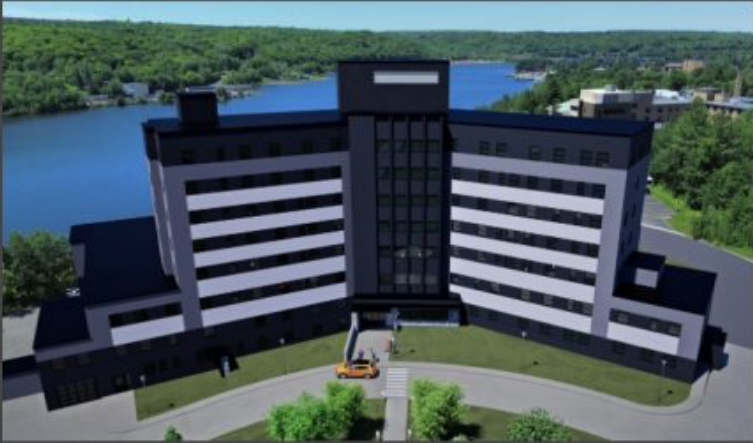
LANSING, Mich.– Michigan Community Capital (MCC) is investing in the transformation of the former Jutila Center in Hancock, Michigan, into Skyline Commons, a 140,000-square-foot mixed-use development that will bring new housing options and vital commercial space to Houghton County. MCC is supporting the project with $11 million in federal New Markets Tax Credits (NMTC) allocation.
“Since Finlandia announced its closure in early 2023, we’ve been on a mission to save this landmark building for Hancock,” said Andy Moyle, President & Property Development at Moyle Development. “It took real persistence, but we finally built the right team and got key support from the City of Hancock, Keweenaw Economic Development Alliance, and Houghton Country Brownfield Redevelopment Authority to bring Skyline Commons to life for the community. The redevelopment breathes new life into a local icon, improves Hancock’s skyline with major exterior upgrades, and adds much needed housing and commercial spaces for the area’s future.”
Led by Moyle Development, Skyline Commons will convert the fifth, eighth and ninth floors of the building at 200 Michigan Street into 29 mixed-income rental apartments, including 15 homes that are affordable at or below 80% of the area median income, 9 of which will be income-restricted. The remaining space will be leased to a variety of commercial tenants, including the Copper Country Intermediate School District, the MTEC SmartZone entrepreneurial hub, and Little Brothers Friends of the Elderly, a nonprofit that provides free programming for older adults.
“This project helps ensure that a landmark building remains a community asset instead of a liability,” said Eric Hanna, president and CEO of Michigan Community Capital. “Skyline Commons will provide quality homes in a market with a severe shortage of rental housing while preserving space for education, entrepreneurship and supportive services all under one roof.”
This redevelopment is expected to create or retain 46 full-time living wage jobs in a “severely distressed” census tract with a poverty rate of nearly 26% in a non-metropolitan county.
The closure of Finlandia University in 2023 left Hancock with a significant amount of vacant real estate and the risk that the 9-story Jutila Center would sit empty or become a costly burden for the county. Without a committed developer and layered public and private financing that includes NMTCs, brownfield incentives, MSHDA housing tax increment financing, and a low-interest $4.5-million loan from the Michigan Economic Development Corporation, the substantial rehabilitation required to bring the structure back into productive use would not be feasible.
“The MEDC is proud to support the Skyline Commons project; this investment building on our commitment to revitalizing communities as part of the state’s Make It in Michigan economic development strategy,” said MEDC’s SVP of Community Planning and Development Readiness Michele Wildman. “By expanding new housing options alongside much-needed commercial space, this project helps meet the community’s growing demand for places to live, work, and gather, supporting residents today and positioning Hancock for long-term vitality. Vibrant, welcoming places are the foundation of a strong economy, and we’re excited to partner with the City of Hancock to create the kind of community where people can build their futures and businesses can thrive.”
Valley National Bank/Dudley Ventures will serve as the NMTC investor.
“Dudley Ventures/Valley Bank is proud to support the Skyline Commons project that will bring much-needed housing and will revitalize an important community asset for the residents of Houghton County,” said Kyle Koupal, Vice President of Investments at Dudley Ventures. “This investment reflects our commitment to strengthening local neighborhoods and supporting initiatives that clearly respond to community need.”
The project directly responds to documented housing needs in Houghton County. According to the State of Michigan Housing Data Portal, the county faced a shortage of 1,914 rental homes in 2023, 55 percent of renters were cost-burdened, and more than half of all homes were more than seventy years old. By creating new, energy-efficient apartments in the heart of Hancock, Skyline Commons will provide options for employees of local businesses and schools, people relocating to the area, seniors and veterans seeking affordable, convenient housing.
Skyline Commons is aligned with the City of Hancock Master Plan’s goals to repurpose former Finlandia University buildings for meaningful community functions and expand quality housing choices. The project has received broad support from the City of Hancock, the Local Development Finance Authority of Houghton County, the Houghton County Board of Commissioners and local school district representatives.
Michigan Community Capital
Michigan Community Capital is a 501(c)(3) nonprofit that exists to promote community and economic development, the creation of wealth and job opportunities; and to facilitate investment of private and public capital in Michigan. MCC is focused on driving economic mobility of low- and moderate-income Michigan residents and drives community development impacts in three key areas: Real Estate Development, CDFI lending, and New Markets Tax Credits. MCC is a U.S. Treasury certified Community Development Entity (CDE) and through its affiliate, Magnet Lending Corporation, a certified Community Development Financial Institution (CDFI). Since 2005, MCC has supported over $1.4 billion in project financing, successfully attracted $510 million in federal New Markets Tax Credits, and helped to create over 1,500 housing units and facilitated the creation and/or retention of over 5,000 high-quality, accessible jobs. Michigancommunitycapital.org.
###
Renovation of a long-vacant building will create new apartments, short-term rentals in a commercial zone, and flexible space for local nonprofits in Muskegon’s Midtown district.
FOR IMMEDIATE RELEASE December 16, 2025
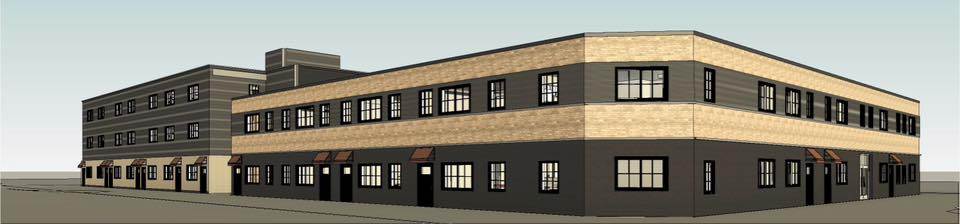
LANSING, Mich.– Michigan Community Capital (MCC) is supporting the transformation of a long-vacant roughly 26,500-square-foot building at 1095 3rd Street into the Muskegon Midtown Center, a 63,000-square-foot mixed-use development that will bring new housing, tourism-focused lodging, and community-serving space to a deeply distressed commercial corridor. MCC is providing $12 million in federal New Markets Tax Credit (NMTC) allocation as well as a source loan through its lending subsidiary, Magnet Lending Corporation.
“This project is more than bricks and mortar for us – it’s an opportunity to create new housing options, support small businesses, and make space for organizations that serve our neighbors every day,” said Frank Peterson, Operating Partner at WheelFish Group, LLC. “Muskegon Midtown Center represents the kind of layered, community-driven investment that can expand opportunity for people who live and work in this district.”
WheelFish Group, LLC will renovate the existing structure and construct a sizable addition to create 56 residential units, 17 of which (30%) will be affordable at or below 80% of area median income (AMI). In addition to apartments, the project will include commercial space for a short-term vacation rental business that is intentionally located in a commercial district, flexible meeting and classroom space for local nonprofits and grassroots groups, and back-of-house space that will support operations at the nearby Hackley Castle Inn and Suites boutique hotel.
“Muskegon Midtown Center is exactly the type of catalytic, mixed-use investment that New Markets Tax Credits were designed to support,” said Eric Hanna, president and CEO at Michigan Community Capital. “By pairing our NMTC allocation with a loan from our subsidiary Magnet Lending Corporation, we are able to help bring new homes, responsibly located short-term rental services, and community-centered nonprofit space to a corridor that has experienced disinvestment for decades.”
The project is located in a census tract which qualifies for NMTC as a “deeply distressed” tract with a poverty rate of 33.7%, median family income at 36% of the area median, and an unemployment rate more than twice the national average. The site is also in an Opportunity Zone and a CDFI Investment Area, underscoring the need for reinvestment and accessible opportunities for residents.
Dudley Ventures / Valley National Bank is serving as the NMTC investor.
“We are proud to be the NMTC investor in the Muskegon Midtown Center. This mixed-use development will create needed quality housing and nonprofit space, as well as support long-term community revitalization,” said Troy McClelland, Vice President of Tax Credit Services at Dudley Ventures. “Our commitment reflects a belief in Muskegon’s future and the power of strategic partnerships to create lasting economic and social impact.”
Muskegon Midtown Vacation Rentals, LLC will lease space for 11 short-term vacation rental units within the mixed-use building. This model aligns with the City of Muskegon’s approach of treating vacation rentals as commercial enterprises and locating them in appropriate commercial zones. Concentrating short-term rentals in the Midtown commercial district helps direct tourism spending toward local businesses and restaurants while preserving the peace and character of residential neighborhoods.
Reset Ventures, a local nonprofit that has deployed more than $3 million to support community organizations since 2021, plans to lease space for community-oriented meeting and classroom facilities. The space will be available to smaller nonprofits and grassroots groups that often lack access to affordable, professional venues for their work. Planned uses include neighborhood organizing meetings, skills-building classes, nonprofit retreats, and community forums that strengthen local networks and civic engagement.
Hackley Castle Inn and Suites, a boutique hotel under construction in a former 1890s school building across the street, is expected to lease lower-level space in Muskegon Midtown Center for storage, staff training, and other operational needs. This arrangement will help preserve guest-facing areas in the historic hotel while supporting efficient day-to-day operations.
Michigan Community Capital
Michigan Community Capital is a 501(c)(3) nonprofit that exists to promote community and economic development, the creation of wealth and job opportunities; and to facilitate investment of private and public capital in Michigan. MCC is focused on driving economic mobility of low- and moderate-income Michigan residents and drives community development impacts in three key areas: Real Estate Development, CDFI lending, and New Markets Tax Credits. MCC is a U.S. Treasury certified Community Development Entity (CDE) and through its affiliate, Magnet Lending Corporation, a certified Community Development Financial Institution (CDFI). Since 2005, MCC has supported over $1.4 billion in project financing, successfully attracted $510 million in federal New Markets Tax Credits, and helped to create over 1,500 housing units and facilitated the creation and/or retention of over 5,000 high-quality, accessible jobs. Michigancommunitycapital.org.