Michigan Community Capital recently welcomed two new board members to its Board of Directors. View the entire MCC Board of Directors here.
Stephanie Osterland
Chief Executive Officer HABITAT FOR HUMANITY DETROIT
Joined Michigan Community Capital Board of Directors in September 2023
After serving as Program Director at a neighboring Habitat affiliate for 8 years, Stephanie joined the Detroit team in 2020. In this leadership role, she works to fulfill the mission ensuring all Detroiters have a safe and affordable place to call home. Stephanie works alongside an amazing team and together they seek to improve quality of life through housing solutions focusing on homeownership, financial education and home repair services for seniors and military veterans. Stephanie has worked in the nonprofit sector for nearly 20 years and has extensive professional experience in human services, nonprofit program development, affordable housing, mental health counseling and social work. She is passionate about equitable community development and access to opportunity for marginalized groups. Stephanie holds a BS in Psychology from Michigan State University and a MA in Counseling from Oakland University.
Brad Heffner
Associate General Counsel MICHIGAN ECONOMIC DEVELOPMENT CORPORATION
Joined Michigan Community Capital Board of Directors in May 2023
Brad Heffner joined the Michigan Economic Development Corporation in January 2009 and currently serves as Associate General Counsel and Strategic External Relations Advisor for the organization. He has more than 30 years of experience in state and local government, issue advocacy and governmental affairs.
Prior to his MEDC role, Heffner served as City Manager for the City of Ithaca, Michigan. He has served on a number of statewide boards and organizations, including an elected term on the Ithaca School Board. He is a graduate of Albion College and obtained his law degree at the Western Michigan University Thomas M. Cooley Law School.
July 14, 2023
Jim Ananich
President GREATER FLINT HEALTH COALITION
Joined Michigan Community Capital Board of Directors inJune 2023
Jim Ananich is President and CEO of the Greater Flint Health Coalition. Greater Flint Health Coalition (GFHC) functions as collective impact organization to serve as the neutral backbone and convening entity to lead and coordinate collaborative efforts to improve population health status, reduce and prevent disease, improve the quality and cost effectiveness of the healthcare system, and reduce health disparities. The GFHC is composed of a broad partnership of leadership from public health, physicians, hospitals, health systems, health insurers, safety-net providers (including federally qualified health centers and community mental health), business, education, community-based organizations, nonprofits, government agencies, policymakers, organized labor, faith-based partners, and committed citizens.
A Flint resident, Ananich previously served two-full terms leading the Senate Democratic Caucus. In this position – and even before – he found success advancing bipartisan legislation that helped workers through economic downtimes, families have access to healthy foods and clean water, and better resources for local communities to invest in services and infrastructure.
Two national awards and one statewide award name Michigan Community Capital as recipient in May 2023
FOR IMMEDIATE RELEASE Thursday, June 1, 2023
LANSING, MICH. – May was a monumental month for Michigan Community Capital (MCC) who accepted three awards from two industry organizations. Two (2) New Markets Tax Credit (NMTC) investments led to receiving the Real Estate QLICI of the Year and Small Business QLICI of the Year designation from the 2023 Novogradac Journal of Tax Credits Community Development QLICIs of the Year. Additionally, MCC’s Lofts on Rowe development received the 2023 Tax Credit Award from the Michigan Historic Preservation Network (MHPN).
For 18 years, Michigan Community Capital (formally Michigan Magnet Fund) has invested in transformational community development projects across the state of Michigan that create housing, jobs and access to fresh food through NMTC allocations. Since the organization’s inception, MCC has worked to advance these projects using the best tools possible, even if it means creating new tools or wearing new hats.
Starting in 2018, MCC has taken its lending and investment know-how and began development of projects starting with Cadillac Lofts. As of today, nine (9) properties developed and/or co-developed by MCC has led to investing more than $89 million in Michigan communities, creating 421 new residential units and 68 new permanent jobs, and activating almost 350,000 square feet of indoor real estate.
Being a community development lender has helped Michigan Community Capital become a diligent and lean developer, and their development experience has also influenced their lending and investment approach.
“We are honored to be recognized by our partners and friends at MHPN, and proud to be recognized nationally by Novogradac Journal of Tax Credits,” said Eric Hanna, president and CEO of Michigan Community Capital. “The MCC team works very hard to deliver projects that communities need, whether as a lender, developer, investor, or insurer. We are grateful to both organizations for recognizing our work and the impact it has on the communities we serve.”
Lofts on Rowe in Ludington, Michigan
2023 Michigan Historic Preservation Network Tax Credit Award
Lofts on Rowe
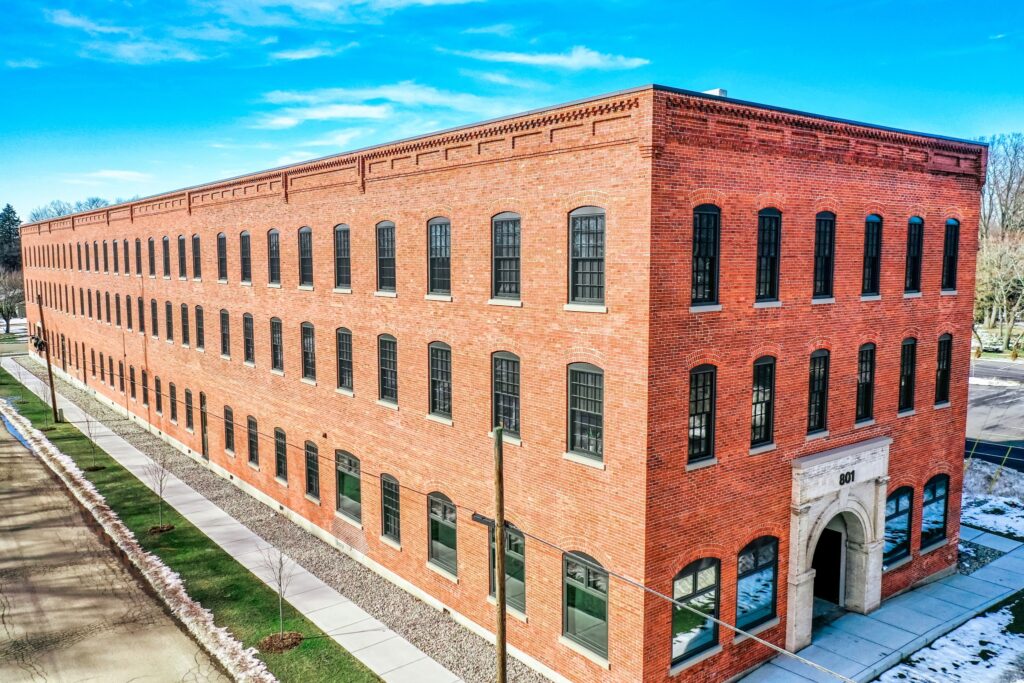
Michigan Community Capital’s development, Lofts on Rowe, was named the winner of a 2023 Tax Credit Award from the Michigan Historic Preservation Network (MHPN), and the award was presented in-person on Friday, May 12 at the 2023 MHPN Annual Conference on Mackinac Island.
After sitting vacant for nearly 30 years, the 1892-brick building fronting a full city block on the edge of a residential neighborhood just north of Ludington’s downtown was rehabilitated into 67 residential units. The building housed a series of manufacturing businesses, including Carrom wooden games and Haskell Canoe Company, and served as the headquarters for the Civilian Conservation Corps Camp Ludington in the 1930s.
The building’s industrial character is featured in the exposed interior brickwork and original wood beams. Amenities available to residents include a fitness room, bike storage, and on-site parking, and the ground level offers a commercial suite for local small businesses.
Utilizing historic tax credits, the $14-million project revitalized a long abandoned and neglected historic building in the heart of the neighborhood, giving the city and region a historic asset that will serve residents and community members for decades to come.
Michigan Community Capital served as the developer on the Lofts on Rowe project, and additional partners included Michigan Economic Development Corporation, Pennies from Heaven Foundation, PNC Bank, West Shore Bank, the City of Ludington and Mason County.
Two awards from the 2023 Novogradac Journal of Tax Credits Community Development QLICIs of the Year Awards named Michigan Community Capital.
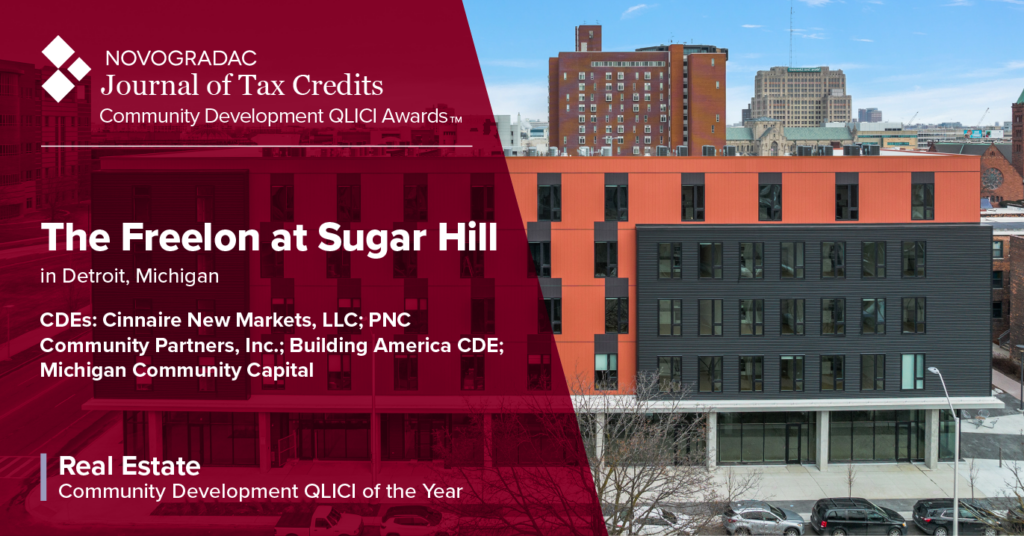
Real Estate QLICI of the Year
The Freelon at Sugar Hill
The Freelon at Sugar Hill is an inclusive community for all Detroiters, reinforcing urban vitality in Midtown Detroit’s Sugar Hill Arts District. The $35-million project co-developed by the Preservation of Affordable Housing (POAH) and Develop Detroit, replaced a vacant lot across the street from the John D. Dingell VA Medical Center with 68 apartments, 11,900 square feet of retail space, and a 160-space parking garage. Of the 20 affordable housing units, 14 were created for veterans served by the U.S. Department of Housing and Urban Development’s HUD-VASH program through the Dingell VA Center. Another six apartments are set aside for those earning up to 80 percent of area median income. The mixed-use building supports inclusive growth within the historic district as a cultural, commercial, and residential destination.
MCC provided $6 million in NMTC allocation in partnership with PNC Bank, Building America CDE, and Cinnaire.
Small Business QLICI of the Year
Detroit Food Commons
The Detroit Food Commons is a new-construction development on the southeast corner of Woodward Avenue and Euclid Street in Detroit’s North End neighborhood. The two-story, 31,000-square-foot building will house the Detroit People’s Food Co-op – a community-owned grocery selling healthy, locally sourced food, a deli and bakery, and a neighborhood café – on the first floor. The second floor will house four teaching kitchens, a banquet hall/community meeting space and office spaces for nonprofit organizational use.
Located within a CDFI-qualified severely distressed census tract, the ground-level grocery will provide healthy, affordable options to more than 31,000 low–income community members and over 19,000 food desert residents within a 1.5-mile trade radius.
The nearly $20-million project spearheaded by non-profits Detroit Black Community Food Security Network (DBCFSN) and Develop Detroit (DDI) received $7 million in New Markets Tax Credits allocation from Michigan Community Capital in partnership with New Markets Support Company, and U.S. Bancorp Impact Finance.
The Novogradac Journal of Tax Credits Community Development QLICIs of the Year Awards recognize community development entities (CDEs) that made exceptional qualified low-income community investments (QLICIs) in the past year. The in-person award ceremony will be held at 9 am Eastern, Thursday, June 8, at the Fairmont Washington, D.C. Georgetown, during the Novogradac 2023 Spring New Markets Tax Credit Conference.
About Michigan Community Capital
Michigan Community Capital (MCC) is a non-profit diversified public-private partnership that supports the missions of the Michigan Economic Development Corporation (MEDC) and the Michigan State Housing Development Authority (MSHDA) by aggregating capital and facilitating the financing and development of low-income and attainable housing, and the redevelopment of complex brownfield sites within the State of Michigan. MCC is a U.S. Treasury certified Community Development Financial Institution (CDFI) and the only Community Development Entity (CDE) that deploys this resource solely throughout the entire State of Michigan. Over its 18-year history, MCC has supported over $1.2 billion in project financing, successfully attracted $380 million in federal New Markets Tax Credits, and helped to create over 1,350 housing units, 1.3 million square feet of commercial, retail and industrial space to facilitate job creation and expansion and insures over 22,000 affordable multifamily doors. MCC provides products in four key pillars: housing equity, bridge and gap lending, New Markets Tax Credits, and property insurance for Low-Income Housing Tax Credit projects.
WNEM TV5 – Published: Feb. 23, 2024 at 5:17 PM EST
New homes under construction in Flint’s historic Carriage Town neighborhood
From vacant lots to vibrant community homes
Wednesday, March 8, 2023
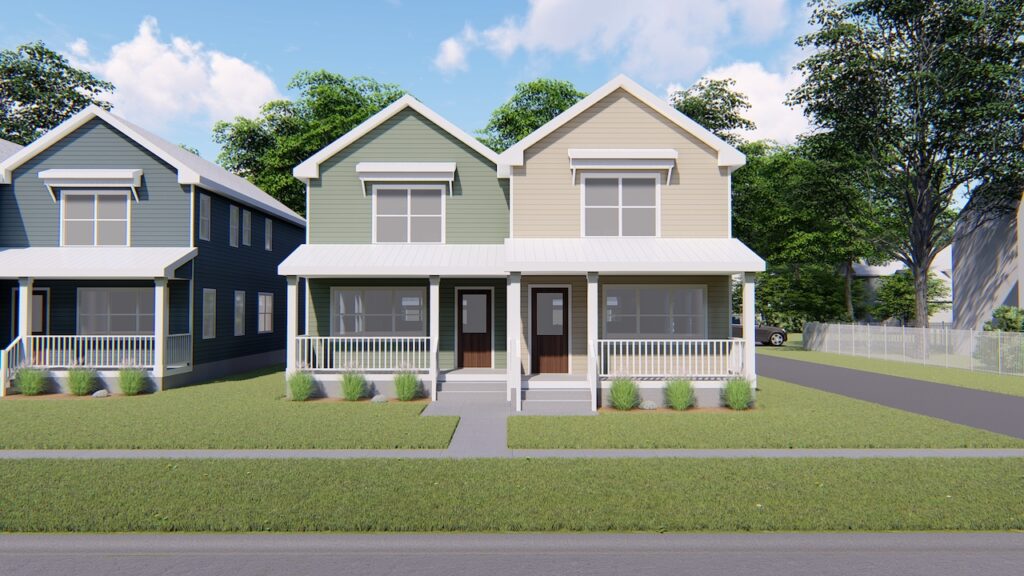
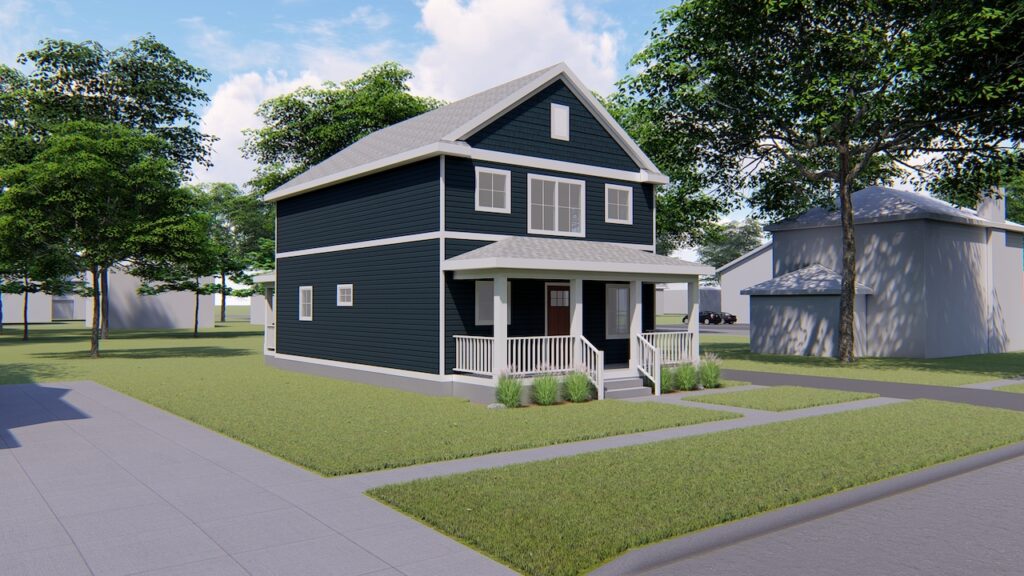
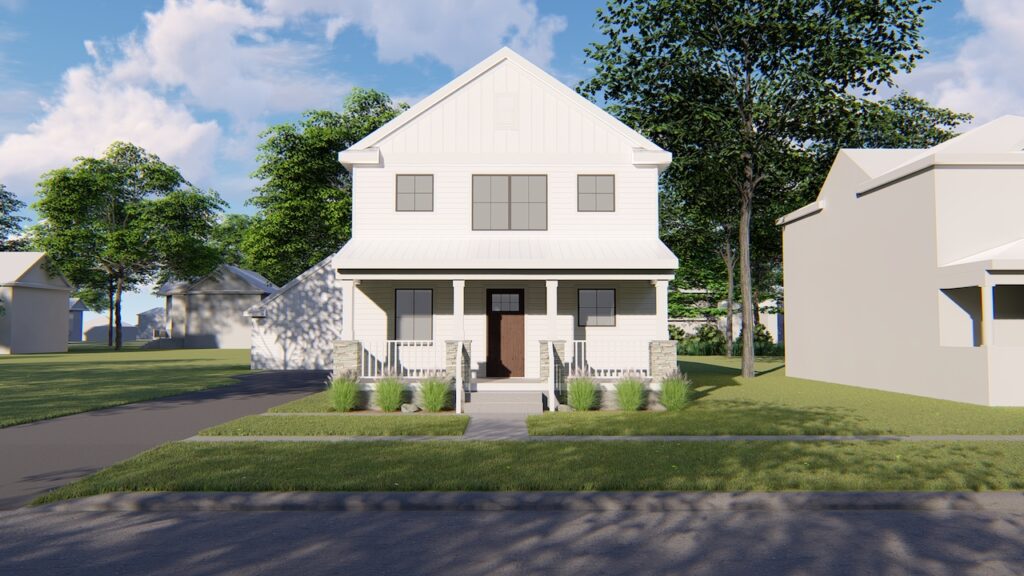
Six new houses are being built in Flint’s Carriage Town neighborhood thanks to a coordinated effort between Michigan Community Capital (MCC) and Uptown Reinvestment Corporation (URC). This project will be some of the first new construction of homes in this historic neighborhood in nearly a century.
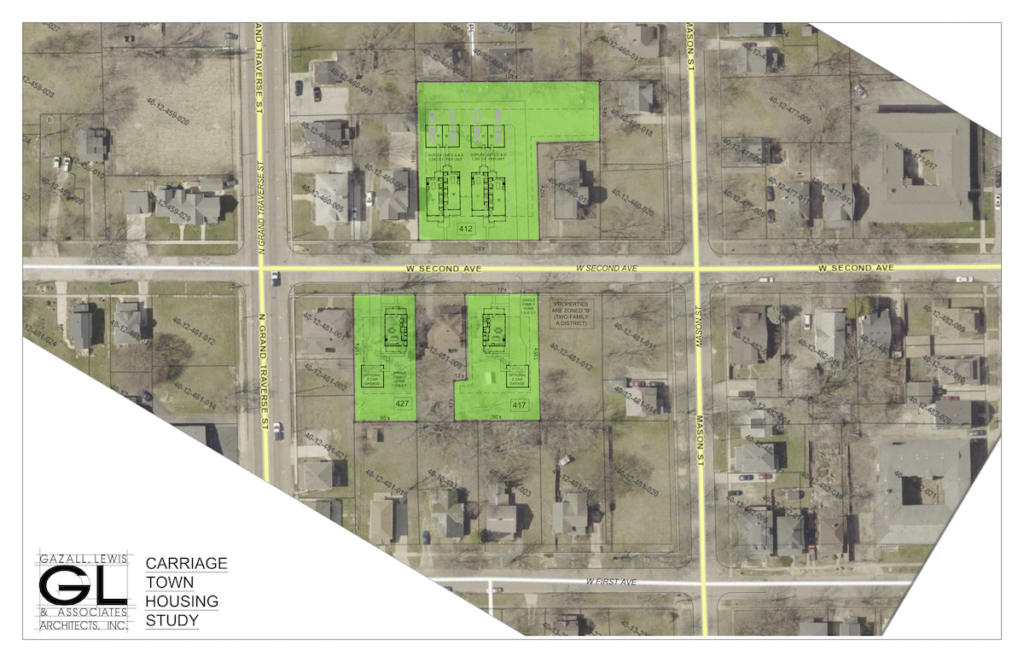
The homes, which are being developed by Flint Home Ownership Initiative, LLC, will be located on West 2nd Avenue between North Grand Traverse and Mason streets on three parcels owned by the Genesee County Land Bank Authority. By developing houses on these strategic parcels within the neighborhood, project partners strive to promote homeownership, generate long-term tax revenue for the city, help stabilize the local residential housing market, build on the neighborhood’s strong sense of community, and model sustainable finance structure for future investments in Carriage Town.
Carriage Town is a fantastic neighborhood in the city of Flint that has a rich history and community character. We are proud to bring additional homeownership opportunities at a variety of price points to continue investment in this unique district.
Marilyn Chrumka, VP of investments at Michigan Community Capital.
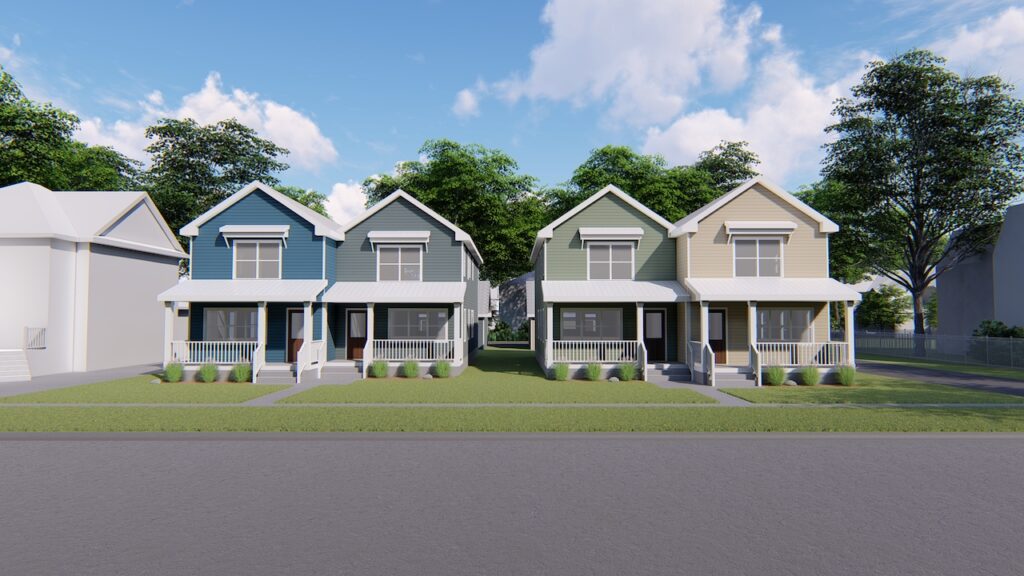
At 412 West Second Avenue, a small condo association is being developed on the 1/2-acre site. The two sets of duplexes (four homes in total) were designed to fit into the scale and character of the neighborhood. Each 3-bedroom, 2-bathroom unit will be approximately 1,250 square feet and will feature a front porch, rear detached garage, and high-quality building materials. The condo association fee will cover common area maintenance, exterior home repairs, landscaping and snow removal.
“This project is a significant step forward for the Carriage Town neighborhood and the City of Flint. These six housing units are some of the first market-rate single-family homes built in Flint in nearly a decade. This public-private partnership aligned the unique resources of local, county, philanthropic, and federal stakeholders to provide safe and quality workforce housing. In addition, we are honored to work alongside neighborhood residents and organizational partners to contribute to the ongoing neighborhood investments in Carriage Town.”
Moses Timlin, MUPP, Development Coordinator at Uptown Reinvestment Corporation
Across the street, the vacant parcels at 417 and 427 West Second Avenue will each be redeveloped into a 1,500-square-foot, 3-bedroom, 2.5-bathroom, single-family home.
Thoughtful design on all of the homes reinforces the character of historic district through complementary new construction.
Construction materials include:
Slab on Grade Foundations
Wood frame, stick-built construction
Composite siding
Asphalt shingles
Anderson 100 Windows
Interior walls will be drywall & painted
Carpeted bedrooms
Luxury Vinyl Tile floor common areas
Quartz or granite Counters
Solid wood cabinets
Kitchen island
Tile backsplash in kitchen
Stainless steel kitchen appliances
Gas stove
Dishwasher
Garbage disposal
Microwave above stove
Refrigerator
Fiberglass shower/tub
Washer/Dryer included
Duplexes come with single-car garage & two surfaced parking spaces
Single-family homes have garage add-on option for additional cost
This project is unique because it utilizes Brownfield Tax Increment Financing in partnership with the City of Flint to help offset the construction cost and the homes’ market-rate price. The project aims to be an example to encourage other investors to build new-construction homes on vacant lots in the city of Flint. In addition, the project showcases strong public-private partnerships by redeveloping Genesee County Land Bank Authority-owned parcels, which will be transferred to the private homebuyer upon sale. Lastly, this $2-million project uses a combination of public and private funding from the Community Development Finance Institution Fund, Charles Stewart Mott Foundation, URC and Michigan Community Capital.
This development could not be built without community support! The Carriage Town Historic Neighborhood Association provided valuable feedback and letters of support to obtain Historic District Commission and City Council Approval.
All six homes are anticipated to be listed for sale in January 2024 and are currently projected to range in price from $155,000 to $188,000.